When an exceptionally skilled orthopaedic surgeon in North Rhine-Westphalia decided to separate from his long-term group practice to open his own independent clinic, he expected his loyal patient base to follow. He had spent years building a reputation for clinical excellence. The physical clinic was pristine, the staff was trained, and the doors were open.
Yet, for the first few weeks, the treatment rooms remained silent. The clinic was operating at a fraction of its capacity.
The surgeon had fallen victim to a modern medical practice dilemma: Digital invisibility. Because he had been an employee at a large joint practice, his former employer retained the digital real estate. Patients searching for him online were directed to his old practice. Outdated web directories, old partner profiles, and his former employer's dominant local presence created a digital barrier. His patients literally could not find where he had moved.
The Blind Spot of Automated Search Data
In a panic, the local marketing agency representing the surgeon reached out to me. Their initial attempts to research local search volume had hit a frustrating wall. Google Keyword Planner insisted there was zero search volume for orthopaedic specialists in this specific mid-sized German town.
This is where inexperienced marketers make a critical error. They trust the platform data blindly. They assume that zero reported search volume means zero real-world demand. Alternatively, they set up broad-match campaigns with massive geographic radiuses, hoping the algorithm will find anyone with a bad back within a fifty-mile radius.
The result of that approach is always the same: expensive, unqualified clicks from people looking for general medical definitions or clinics too far away to travel to. It is the classic performance paradox where the metrics show activity, but the waiting room remains empty.
Our Surgical Two-Way Strategy
I knew we had to ignore the automated platform warnings and apply expert human precision. We built a lean, dual-axis campaign structured around two very distinct search intents.
The first axis was the Branded Extraction Campaign. We did not just target his name. We surgically targeted search queries combining his name with his old practice, his former partner's name, and the old clinic's location. When an established patient searched for him where they used to see him, our highly relevant search ad appeared at the absolute top of the search results, clearly directing them to his brand-new independent clinic.
The second axis was the Surgical Generic Campaign. We bypassed Google's low-volume warnings by building tight, exact-match keyword groups focusing on local intent, such as orthopaedic surgeon near me and local joint specialist. We restricted the geographic targeting strictly to the immediate town and its neighbouring municipalities, ensuring we did not waste a single Euro on patients unwilling to travel.
The Power of Human Precision
Instead of handing the keys to Google's automated bidding autopilot, which would have panicked due to the lack of historical conversion data, we kept strict manual control. We set a modest budget of 15 EUR per day and focused entirely on the quality of search intent.
Within fourteen days, the results completely transformed the practice.
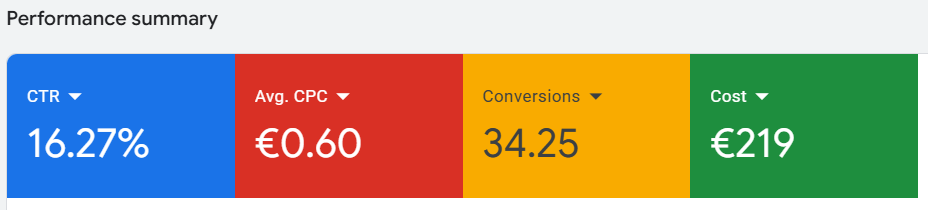
The campaign achieved an extraordinary click-through rate of 16.27 %, proving that our ad copy was highly relevant to local searchers. We generated 367 highly qualified clicks at a remarkably low average cost of just 0.60 Euros per click.
More importantly, we did not just buy clicks; we secured patients. The campaign delivered 34.25 documented conversions within the first two weeks. These were not generic page views, but high-value actions: direct telephone calls, WhatsApp inquiries, and completed online appointment bookings. This translated to an exceptional conversion rate of 9.33 percent.
Within two weeks of launching this laser-focused campaign, the surgeon's empty appointment book was starting to fill. We turned the business around by prioritizing search intent over raw traffic volume, proving that expert human oversight will always outperform blind algorithmic trust.
Book a consulting session with me on Fiverr or send me a message on LinkedIn.