It was a Tuesday morning when the notification arrived. A specialist psychologist running a highly successful Private Clinic in Bangkok reached out to me in sheer panic. His entire lead generation pipeline had collapsed overnight.
Sitting at my desk in Potsdam, I was separated from my new client by 9,000 kilometres. Yet, his stress was palpable through the screen. His clinic relied heavily on Google Search Ads to attract expatriates and international patients. Without those ads, the phone simply stopped ringing.
He told what he did. Because his original account was paused due to a terrifying “compromised site” warning and a complex advertiser verification process, he had done what many desperate business owners do. He abandoned ship and opened a brand new Google Ads account.
I had to tell him immediately that he was walking into a trap.
The Illusion of the Fresh Start
There is a persistent myth in digital marketing that if Google flags your account, you can simply create a new email address, open a new dashboard, and start again. This is a fatal error.
Google’s infrastructure is incredibly sophisticated. The algorithm connects your domain, your IP address, your billing details, and your historical data. When you abandon an account that requires verification to open a new one, Google immediately flags this behaviour as “Circumventing Systems“.
It is the digital equivalent of running away from a routine traffic stop. Instead of a simple paperwork check, you are now treated as a severe security risk.
I told the client to pause the new campaigns immediately. We had to face the algorithm head-on, return to the original account, and solve the root problem. Precision over volume, and compliance over shortcuts.
The Invisible Saboteur of Ad Rank
When I looked under the bonnet of his operation, I found the real reason his ads were blocked. His WordPress website had been quietly compromised months prior.
While the visible pages looked fine to human eyes, the search engine crawlers were seeing something entirely different. The site was indexed for illicit adult groups on telegram and fraudulent software licenses. In the eyes of Google, a highly respected medical professional in Bangkok was suddenly operating a spam network.
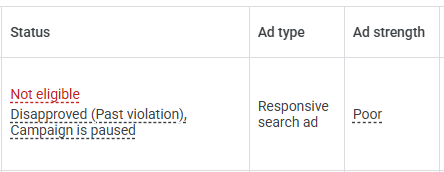
This brings us to a crucial, often overlooked pillar of Search Engine Advertising: Onsite SEO is not just for organic traffic. It is the foundation of your Google Ads Quality Score.
Your Ad Rank is calculated by multiplying your Max CPC by your Quality Score. A massive component of that Quality Score is the Landing Page Experience: If your ad promises professional psychology services, but Google’s crawlers detect hidden malicious code or irrelevant meta descriptions, your your ads are disapproved, your account is suspended, and your lead generation dies. You cannot buy your way out of a bad website infrastructure.
Surgical Recovery Across Time Zones
We began a systematic, surgical recovery. First, the client hired a developer to scrub the injected code from the server. Once the digital infection was cleared, I took over the onsite SEO.
I installed robust SEO plugins, rewrote the title tags and meta descriptions to perfectly match the high-intent search queries of his target audience, and forced Google to re-index the entire site. We had to prove to the algorithm that this domain was relevant, safe, and authoritative.
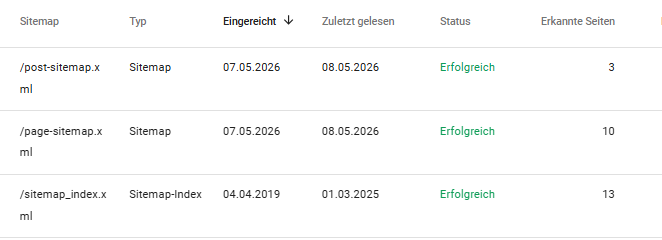
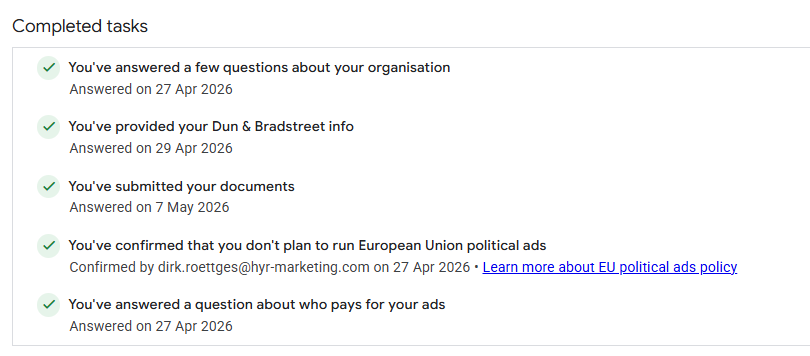
Next, we tackled the verification process. Instead of hiding, we submitted his official registration documents and his passport, establishing total transparency with the platform. Finally, I implemented a watertight, privacy-compliant conversion tracking system via Google Tag Manager, ensuring we only measured genuine enquiries, not vanity metrics.
The Turning Point
After days of intense, cross-continental collaboration, the breakthrough happened. Google approved the verification. The compromised site warning vanished.
We launched a highly targeted, Exact Match search campaign, focusing solely on high-intent “commercial” queries. No broad match scattergun approaches, just laser-focused precision targeting individuals actively seeking his specific expertise in Bangkok.
Within twenty-four hours, the silence broke. The dashboard lit up with impressions, and more importantly, the clinic’s phone began to ring with qualified patients.

The stress that had plagued the client evaporated, replaced by the steady rhythm of a controlled, profitable lead generation machine.
Traffic is a commodity, but a reliable acquisition funnel is an asset. When the machine breaks, do not try to trick the algorithm. Fix the foundation, control your data, and demand leads over clicks.
Book a consulting session with me on Fiverr or send me a message here on LinkedIn.